
Department of Music Lecture: Graduate Student Conference Lectures

Lecturer
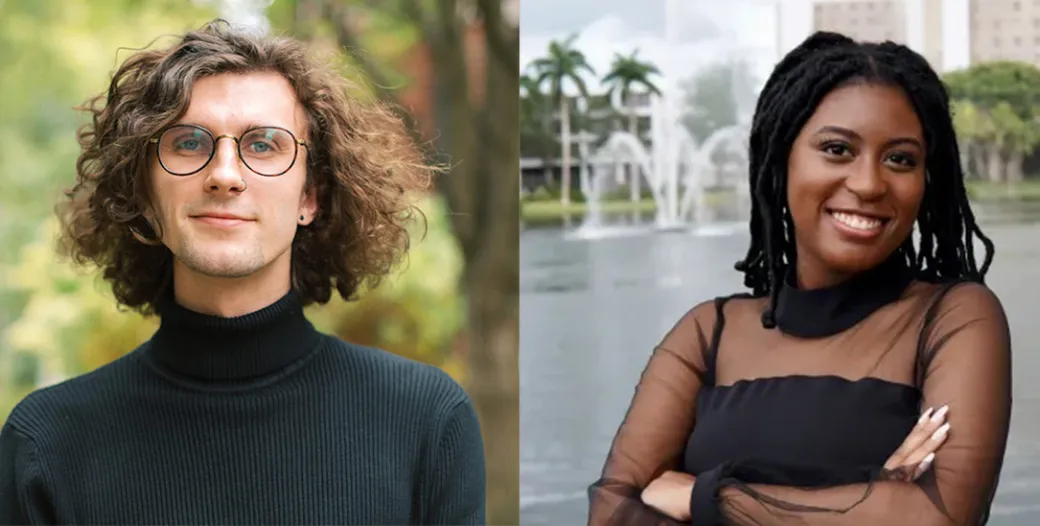
J. P. Cupps, PhD in Music Theory at Washington University in St. Louis
Title
An Unknown Infinite (Archive): Flow, Layering, and Rupture as a Fugitive Theory for Hip-Hop Form
Abstract
Responding to calls to deconstruct the mandate of legibility and politics of racial exclusion inscribed in hip-hop formal analysis, this paper revisits the culture-theoretic tools developed by ethnomusicologist Tricia Rose as the foundation for a theory of form in hip-hop production. I argue that – despite Rose’s canonic reception in the fields of hip-hop studies, cultural studies, and other related fields – she has been rendered peripheral to music theory on account of its epistemologically white-and-male frame. She thus represents what Marc Hannaford has recently defined as a fugitive music theorist; more specifically, her conception of flow, layering, and ruptures in line provides a basis for analyzing hip-hop’s musical forms.
To consider these concepts as fugitive music theory, I demonstrate how they operate in an alternative theoretical space to popular music theory’s governing precepts of function, hierarchy, and syntax. I contend that Rose embeds the musical within the visual, conceptualizing hip-hop’s process of musical assembly in relation to fields like film editing and visual collage. I corroborate by exploring overlaps with visual art theory and practice presented by the Black cinematographer Arthur Jafa, to whom Rose attributes her development of the concepts, and to visual collage practice of Romare Bearden. My analysis then turns to visual and sonic objects from Queens hip-hop artists amani and King Vision Ultra’s LP An Unknown Infinite. Examining both the visual elements of collage demonstrated in the album’s “archive book” and their sonic counterpart demonstrated on the track “Scrapes,” I conclude that flow, layering, and rupture relationships expressed in these texts are irreducible from formal analysis, and contrary to pop-rock theory, remain embedded within hip-hop as a set of intermedial and intercultural practices.
Biography
J. P. Cupps is a PhD candidate in music theory and Lynne Cooper Harvey fellow in American Culture Studies. Their research centers on race, regionalism, and recording process in musical subcultures across the US, spanning interregional scenes for electronic and dance music, as well as styles within broad umbrellas of post-punk and hardcore. This paper’s materials are drawn from their dissertation, tentatively titled An Unknown Infinite: Musical Practices and Discourses of Undergroundness in Contemporary Hip-Hop. In this project, J. P. collaborates with and analyzes alongside members of the Queens-based hip-hop crew PTP to consider how these artists express, historicize, and revise the larger imaginary of the hip-hop tradition within the flexible boundaries of the contemporary New York DIY music scene.
Lecturer
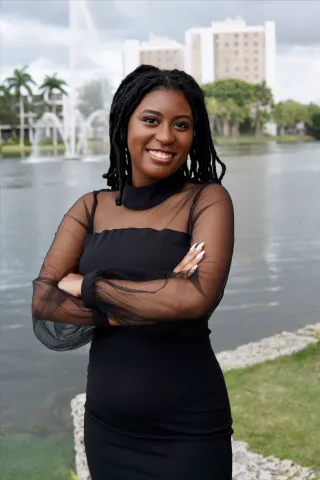
Christina Smiley, PhD student in Musicology at Washington University in St. Louis
Title
(Sonic) Environments: Black Ecological Activism in Wadada Leo Smith’s America’s National Parks (2016)
Abstract
There is a myth that African Americans, broadly speaking, are detached from the environment—that Blackness and nature, and by extension environmentalism, are incommensurate concepts. Taking up an invocation to narrate Black ecological engagement and activism, I engage with AACM composer and trumpeter Wadada Leo Smith and his 2016 album America’s National Parks, to consider how Black musicians engage (with) the environment. Smith’s album attempts to narrate a holistic account of African American’s relationship to waterways, land, and the environment broadly. Various movements from the work serve as conceptual points of departure for dealing with the fraught histories of Black connection to United States’ soil from the brutal and exploitative histories of enslavement, sharecropping, and lynching to communal healing and solidarities in the convergence of Black and Indigenous epistemologies. Building on the work of scholars such as Kimberly Ruffin, Camille T. Dungy, Dianne Glave, and Michael W. Murphy, my paper places Smith within a genealogy of Black ecological activists. I argue, two-fold, that Black activists are not solely interested in socio-political life, but that their political commitments extend to the environment. Conversely, I suggest that ecological concerns are racial concerns, impacting the histories and lived experiences of African Americans.
Biography
Christina Smiley is a 5th-year PhD candidate in musicology with an American Culture Studies certificate at Washington University in St. Louis. She is a recipient of the American Musicological Society Howard Mayer Brown fellowship, the WashU CRE2 Race & Ethnicity fellowship, and the Lynne Cooper Harvey fellowships. Her dissertation “Beyond Signifyin’: Sound Explorations in Black Studies and the Political Potential of Sacred Choral Works (1900-1990)” explores Black participation in classical music, centering the intersections of race, theology, and politics in 20th-century large-scale sacred choral works. Most recently, she has presented at the University of Mannheim, the American Musicological Society, Indiana University’s Jacobs School of Music, Evangelisch Reformierte Kirche in Leipzig, Germany, and performed as a soloist alongside Metropolitan opera singer Adrienne Danrich at the Sheldon Theatre. In conjunction with her scholarly pursuits, Christina is passionate about performance and public-facing education initiatives, having worked closely with the St. Louis Children’s Choirs and the Opera Theatre of St. Louis, presenting for the St. Louis Public School’s Teacher Professional Development Workshop and the Engaging the Local Public Humanities Colloquium and Workshop, and serving as co-chair for the Julia Perry Centenary Symposium in 2024.